
Upheal vs SimplePractice: which EHR fits your practice?

TL;DR
- SimplePractice is a well-established EHR with solid scheduling, billing, and a large user community.
- SimplePractice is more expensive overall: $49-99/month base, plus $35/month for AI. Upheal is $1/session capped at $69/month, AI and all features included.
- Upheal is an AI-native EHR built around agentic AI: one assistant handles documentation, scheduling, billing, telehealth, and client communication.
- SimplePractice offers basic AI called Note Taker at $35/month extra. Upheal comes with sophisticated, highly-integrated AI agent that you can ask to do things on your behalf, and all of the AI features comes included at no extra fee.
- Upheal includes AI-drafted client messages, custom note templates from your own PDF, and an AI assistant. SimplePractice doesn't offer many modern features.
- SimplePractice offers a full insurance billing experience. Upheal's is coming soon. Now is the best time to get started.
You're here because something in your current setup stopped making sense. Maybe SimplePractice's bill went up. Maybe notes are eating your evenings. Maybe you've heard that some EHRs have AI actually built in rather than bolted on, and you want to see what that looks like in practice.
This page covers the real differences between Upheal and SimplePractice: how their AI features work, how pricing compares, and where the gaps are on both sides.
Upheal vs SimplePractice at a glance
Where SimplePractice fits best
SimplePractice is the right choice if you want a traditional EHR and aren't actively looking to lighten your workflow and practice growth using AI. It stores your records, manages your calendar, and handles your billing. Notes are yours to write. Client prep is yours to do. Messages are yours to draft. It's software you work in, not software that works for you.
If you're comfortable with the status quo and not looking to change how you practice, SimplePractice delivers.
Upheal's insurance billing is coming soon. If that's what's kept you from switching, now is the best time to move. Get your records migrated and be ready when it goes live.
Where Upheal fits best
Upheal is the better option if you want a modern practice management software that works for you, not just a software you work in. Upheal’s AI drafts your notes after each session, pulls context before the next one, messages clients, and handles the administrative work that builds up between sessions. Your evenings stop being work hours.
If you're using SimplePractice while paying separately for an AI scribe, Upheal replaces both and saves clinicians money every month.
Insurance billing is coming very soon. If that's what's kept you from switching, now is the best time to move. Get your records migrated, get familiar with the platform, and be ready when it goes live.
How do Upheal and SimplePractice compare on AI?
SimplePractice's only current AI feature is their Note Taker: a $35/month add-on that records telehealth sessions and generates draft progress notes. There is no way to interact with their “AI”, no treatment plans, doesn’t integrate with other workflows, and no way to ask it a question. You record the session, it produces a note, you accept or edit.
Upheal's AI covers three areas:
Documentation:
- Generates notes for in-person sessions, Upheal telehealth, and external platforms like Zoom or Google Meet, included not an add-on
- Multiple note formats: SOAP, DAP, BIRP, and others
- Custom note sections: you define exactly what gets captured
- Custom templates from your own PDF
- Notes link to client goals and treatment plans via Upheal's Golden Thread (upheal.io/features/golden-thread)
- Compliance flags surface documentation gaps before you finalize
- Reduces session documentation to around 5 minutes, compared to an industry average of roughly 16 minutes
- Ask it anything: "Summarize this client's last six sessions." "Draft an ESA letter for my client." "Flag any notes I haven't signed this week."
Sessions:
- Automated intake forms and consent documents sent when a client books
- Scheduling, reminders, and cancellations handled without manual follow-up
- One-click HIPAA-compliant telehealth built in, no third-party app required
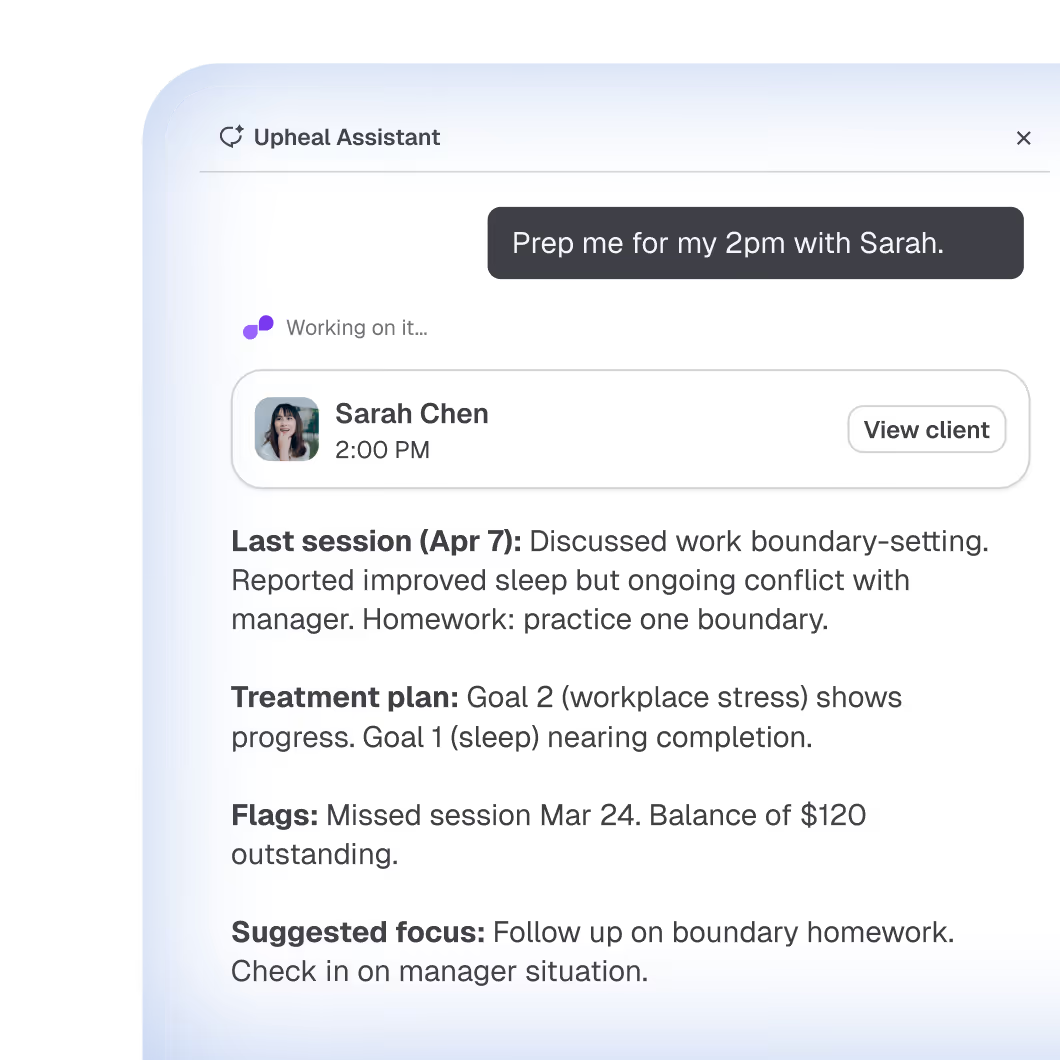
- Session prep: treatment plan status, prior session context, and open tasks surfaced before each client
- Ask it anything: "Prep me for my 2pm with Sarah." "Reschedule my 3pm to next week and send the client a message."
Billing:
- Automated payment processing and invoicing at session end
- Superbill generation from signed notes, formatted for insurance submission
- Dashboard view of paid, pending, and overdue balances
- Ask it anything: "Which clients have outstanding balances?" "Generate superbills for last month." "Flag any sessions I completed but haven't invoiced."
How do the two platforms handle client messaging?
Upheal includes AI-drafted client messages. You can compose a message to a client and Upheal will generate a draft for you to review and send. This is useful for anything from appointment reminders with a personal touch to follow-ups between sessions to routine practice communications.
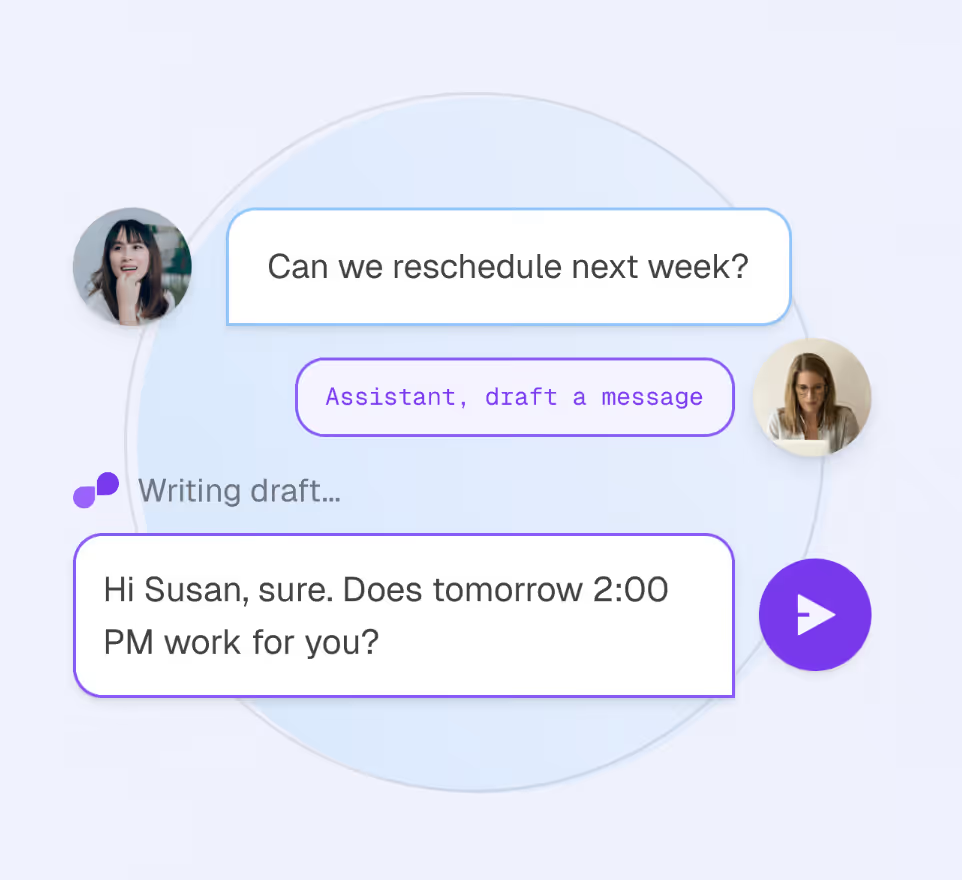
SimplePractice includes client messaging as part of its client portal, but there are no AI drafts. You write the message yourself.
For therapists who communicate frequently with clients outside sessions, or who manage their own admin without support staff, having AI-drafted messages reduces one more piece of overhead.
What's the difference in pricing between Upheal and SimplePractice?
SimplePractice charges solo providers $49/month (Starter), $79/month (Essential), or $99/month (Plus), with AI documentation costing an additional $35/month. Upheal includes AI documentation as part of the platform, included in the $1/session, with a cap of $69/month.
The comparison that matters most isn't just the base plan cost. It's whether AI documentation is included or extra. On SimplePractice's Plus plan with AI notes added, a solo provider pays $134/month before any per-claim fees. On Upheal, AI is part of what you're already paying for.
Two additional cost factors worth noting:
Payment processing fees. Upheal charges 2.9% + $0.30 per transaction. SimplePractice charges 3.15% + $0.30 per transaction. For a practice collecting $5,000/month in credit card payments, that 0.25% difference works out to around $150 a year.
Insurance billing. Insurance billing is coming to Upheal soon. If that's what's kept you on SimplePractice, now is the best time to make the switch. Get your records migrated and be ready when it goes live.
SimplePractice has also raised prices multiple times in recent years. In early 2025, plans increased by roughly 69%. If cost predictability matters to your practice, that pattern is worth factoring into the comparison.
For group practices, SimplePractice starts at $74/month per additional clinician. That number compounds quickly as your team grows. Upheal pricing is the same—$1/session with a cap of $69 per clinician.
What do therapists say when they switch from SimplePractice to Upheal?
When therapists consider leaving their EHR, two things come up every time: cost and fragmentation.
"Everything is a la carte and pieced together. You end up paying out the wazoo." The EHR for scheduling. The AI scribe for notes. The billing tool for claims. Each one costs something. None of them talk to each other.
After switching to Upheal, therapists describe the opposite: one workflow, one bill, notes that don't need a second app. "This feels like software I could actually use." And for the ones who care about what their documentation says over time: "It's not just a time-saving tool, it's a learning tool."
If you've been on SimplePractice and want to see what an AI-native EHR feels like to use:
Start free at upheal.io/signup
Frequently asked questions
Is Upheal a good SimplePractice alternative?
Yes. Upheal is a full EHR with scheduling, telehealth, AI-native session notes, and an AI agent built in — all included in the platform. Insurance billing is coming soon. If that's what's kept you from switching, now is the best time to move.
Can I migrate my client data from SimplePractice to Upheal?
Yes. Upheal includes a self-serve AI migration tool that handles the process without manual data entry or onboarding calls. You export your records from SimplePractice, and Upheal's migration tool handles file validation, client matching, and data deduplication automatically. What traditionally takes 4–5 weeks and 10–15 hours of manual work takes an afternoon of setup and an overnight import. Once your records are in, the AI assistant can draw on your full client history immediately.
Is SimplePractice or Upheal better for solo therapists?
If documentation time is your biggest source of overhead, Upheal's AI handles the work for you and is included at no extra cost. SimplePractice's AI is a separate $35/month add-on. Insurance billing is coming to Upheal soon.
Is SimplePractice or Upheal better for group practices?
Upheal, in most respects. SimplePractice lacks role-based permissions, group session note templates, and practice-level clinical reporting. Per-clinician pricing at $74/month also becomes expensive as a team grows. Insurance billing is coming to Upheal soon. Now is a good time to get started and get your records migrated.
Does SimplePractice have a conversational AI assistant?
No. SimplePractice's current AI is Note Taker, a $35/month add-on for session notes. There is no conversational AI assistant. Upheal's AI agent is conversational: you can ask it anything, give it tasks, and it handles documentation, scheduling, billing, and admin on your behalf.
What makes Upheal's AI different from SimplePractice's AI Note Taker?
Upheal's AI is built into the EHR from the ground up. Session notes connect to client goals and treatment plans, AI compliance flags check your documentation before you finalize it, it works for every session type, and you can build custom note templates from your own PDF. SimplePractice's AI Note Taker costs $35/month extra, only works for telehealth sessions, and produces standalone notes that don't connect to the rest of the clinical record.
The bottom line
SimplePractice is a solid EHR with a long track record and reliable billing. If insurance billing is central to your practice right now, it's the more complete option today.
But if documentation time, cost creep, or the sense that your tools are patched together are the reasons you're looking around, those aren't problems SimplePractice is designed to fix. The AI costs extra. The notes don't connect to goals. The assistant doesn't exist.
Upheal is built specifically for those problems. The AI is part of the platform, it works for every session type, it includes a conversational AI agent, and insurance billing is coming soon.
You can compare Upheal to other EHR platforms at upheal.io/comparisons if you're weighing additional options alongside SimplePractice.